The Military Community Advocates program empowers military-connected student leaders to drive change on campuses across the country
MILITARY COMMUNITY ADVOCATES
The NVLF’s Military Community Advocates (MCAs) are student leaders dedicated to strengthening and supporting the military-connected student population. Their efforts create a more inclusive campus environment and enhance the higher education experience for these students. Through the MCA program, student leaders are empowered to design and implement initiatives that benefit military-connected students. By fostering a culture of inclusion, Advocates help universities celebrate and support the success of those who have served our country.
Each Advocate serves for a year, dedicating 4-6 hours per week to their role. They receive a service scholarship and access to project funds, along with NVLF-provided programming and support to maximize the program’s impact. NVLF offers counsel and assistance to campus military-veteran office directors, providing a program toolkit to help launch and sustain these initiatives. Advocates participate in national NVLF programming, including Career Workshops and virtual All Advocate meetings, fostering networking and learning opportunities.
Advocates are placed in various campus departments, offices, and colleges, developing innovative programs and events to serve, engage, and support military-connected students. Acting as “force multipliers,” they extend the reach and impact of military-veteran offices. Serving as an Advocate enables military-connected students to significantly impact campus life, providing valuable resume experiences that enhance their future career prospects.
Advocates have improved campus policies on military service, created suicide prevention programs, expanded veteran recruiting, established mentoring initiatives, organized community-building events, and sponsored trauma-informed writing projects. Each Advocate identifies the most significant difference they can make and is empowered to act.
Through their efforts, Advocates earn service scholarships and gain resume experiences that prepare them for future career success. By transforming the college experience for military-connected students, NVLF Advocates are making a profound impact on thousands of students committed to serving their country.
If you are interested in becoming a Military Community Advocate, please contact your campus’ Military and Veterans Services office.
MCA Stories
From MCA Project to a Movement: How Dr. David Hibler’s Vision Became SUMMIT 2026
What started as a Military Community Advocate (MCA) project at The Ohio State University became something much bigger.
As Dr. David Hibler prepared to graduate with his PhD and conclude his time as an MCA, he wanted to bring together the many people across Ohio State and Central Ohio working on military and veteran-related research, programs, services, and initiatives.
His idea was simple but powerful: connect people who were often working in separate parts of the university and community, create new relationships, share ideas, and build collaborations that could better serve military-connected students, veterans, service members, and their families.
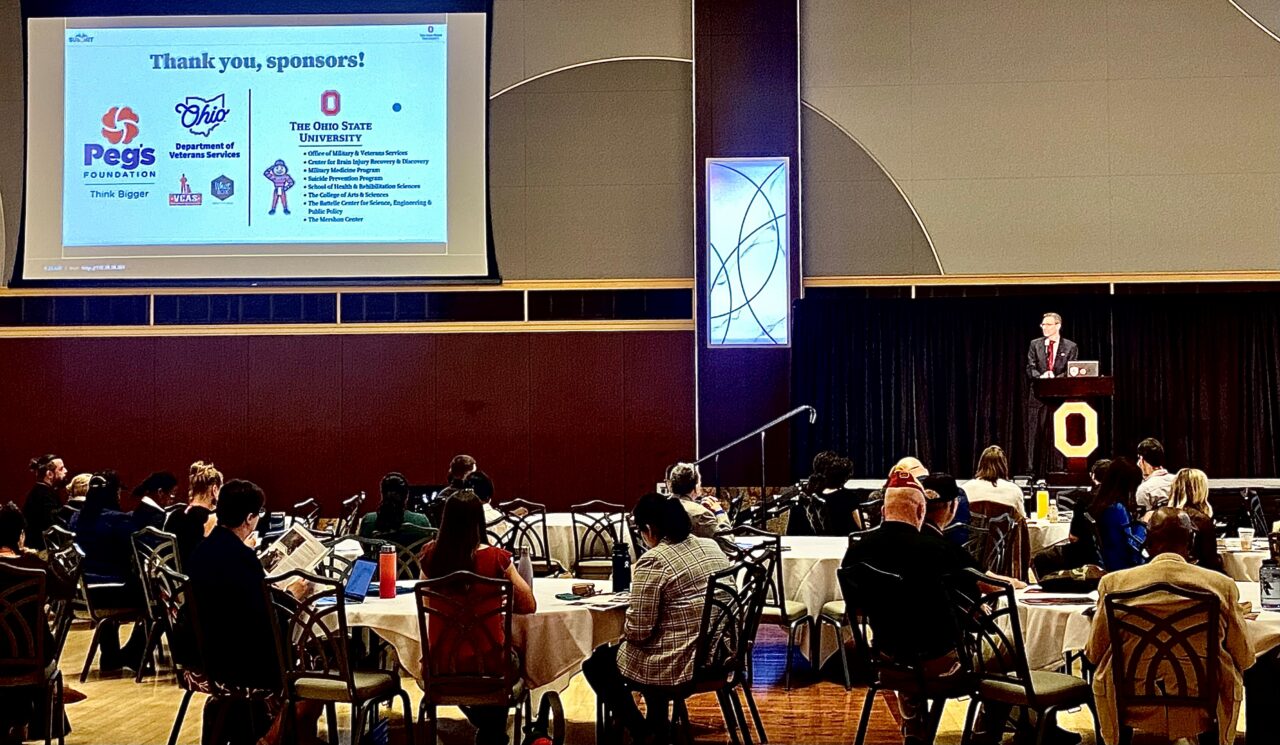
That idea became SUMMIT 2026, the Symposium on Unified Military & Veteran Multidisciplinary Innovation and Translation, held August 7 at the Ohio Union.
And it grew far beyond what anyone initially imagined.
More than 225 people registered for the symposium, which featured more than 60 poster presentations and nine featured speakers from across the country. Ohio State departments and Central Ohio organizations recognized the value of the idea and stepped forward to sponsor and support the event.
The result was more than a successful symposium. It created connections among people who might not otherwise have crossed paths, and participants are already turning those connections into new partnerships, projects, and opportunities.
For Hibler, that was exactly the point.
“Our military-connected community deserves excellence in the systems that support them; meaningful inclusion in the research, implementation, science, and policy that shape their lives; and a seat at the table where their experience, knowledge, and passion can help lead the way.”
He believes achieving that vision requires people to move beyond the traditional boundaries that can separate disciplines, departments, institutions, and communities.
“That requires us to break down silos, work across disciplines and divisions, build new collaborations, and bring creativity and new perspectives to persistent and emerging challenges.”
Hibler’s hope was that SUMMIT would shine a spotlight on that work while creating opportunities for people to discover one another, share ideas, and imagine what might be possible when they work together.
“If it helped us take even a few crucial steps toward realizing our collective potential as leaders in this field,” Hibler said, “then SUMMIT accomplished exactly what I hoped it would.”
A Personal Mission
For Hibler, the project was more than an academic symposium. It was deeply personal.
After returning from a 15-month deployment to Baghdad as an Army combat medic, he experienced firsthand some of the challenges military-connected students can face as they navigate higher education.
As an MCA, he used those experiences to help make the path better for those who came after him.
That work ultimately led to SUMMIT 2026, a project that brought together his personal experience, academic interests, professional relationships, and vision for the military-connected community.
In that sense, SUMMIT 2026 became a culmination of his work as an MCA while also creating something that can continue long after his time as a student leader ends.
The Power of an MCA Idea
This is what the Military Community Advocate program is designed to make possible.
MCAs are empowered to identify challenges facing military-connected students, develop solutions, build relationships, and lead initiatives that create lasting change on their campuses and in their communities.
David’s story demonstrates what can happen when a student leader is given the opportunity, resources, and support to turn an idea into action.
What began as an MCA project became a gathering focused on collaboration, innovation, research, and service to the military-connected community.
His story is a reminder that when we invest in military-connected student leaders, we are not simply supporting students. We are empowering them to become catalysts for change.
Grant Hayden – Bowling Green State University
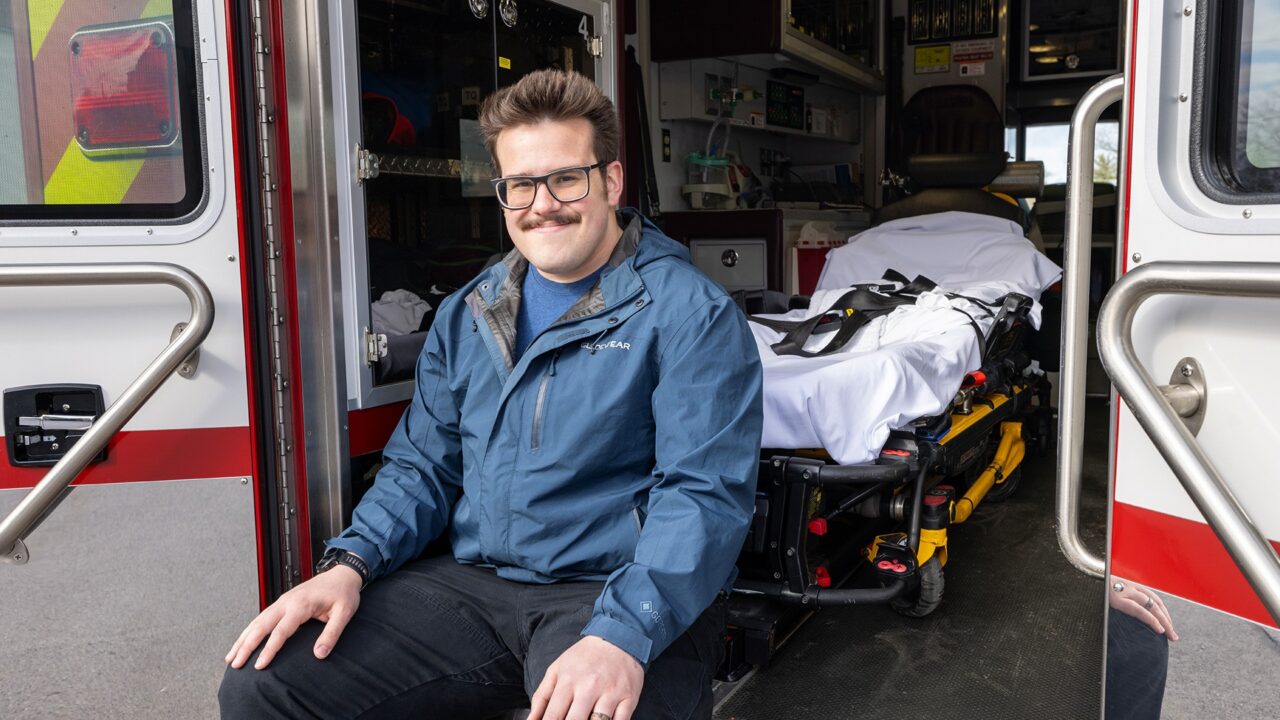
When Grant Hayden became an MCA in BGSU’s Nontraditional and Military Student Services office, he set out to do more than keep the campus tutoring program running. He wanted to expand it and to build something military-connected STEM students didn’t yet have: a clear path from tutoring session to graduate school acceptance letter.
He started by growing the tutoring program itself, recruiting two additional tutors, both military dependents, to expand its capacity. Just as important, he broadened its scope. What had been a remedial tutoring program now also prepared students for the high-stakes exams that open doors to their next steps: the AFOQT, GRE, MCAT, PCAT, and PA-CAT. Alongside that, Grant began meeting one-on-one with military-connected STEM students to map out career options, plan course sequences, and connect them with undergraduate research opportunities that could double as STEM internships.
One relationship in particular defined his time as an MCA. A Marine veteran and biology student came to Grant through remedial tutoring, struggling academically. As his grades improved, so did his ambitions, and he began meeting with Grant to talk about what came next. Together, they worked through the prerequisites for physical therapy, chiropractic, and physician assistant programs, and built a course schedule that would let him graduate on time while keeping every option open. That student is now on track to graduate this semester, with plans to train as a fire paramedic and the door still open to return to graduate school down the road.
“Helping him explore his career options and succeed academically has been a very motivating experience for me,” Grant said, “and I hope to help as many military-connected students in a similar manner as possible.”
Grant credits much of his effectiveness as an MCA to something simple: knowing the system from the inside. BGSU offers strong funding for undergraduate research, but the process of finding a faculty mentor and completing the application can feel intimidating and opaque to students navigating it for the first time. Having been through it himself, Grant was able to demystify it, connecting students directly with faculty in their fields of interest and walking them through each step of the application.
For Grant, being an MCA meant more than pointing students toward resources. It meant lowering the barriers standing between them and those resources, one student, one conversation, one application at a time.
Hannah Raterman – The Ohio State University
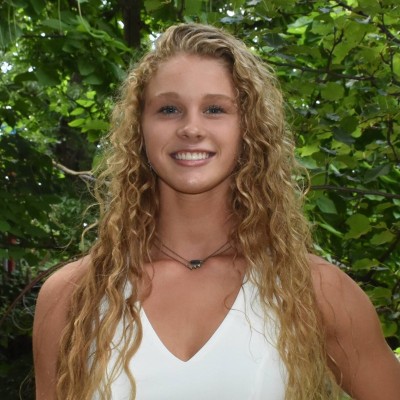
As the Military Community Advocate for Ohio State’s College of Engineering, Hannah Raterman had a clear vision from the start: give military-connected engineering students the connections, resources, and experiences that would make campus feel less like a place they passed through and more like a community they belonged to.
She built that community one event at a time, and made sure each one had staying power. “Bring the Wings! ” was a morale-boosting outing to Buffalo Wild Wings, run three times. “Snacks & Studies” turned a tutoring space in Hitchcock Hall into a welcoming spot stocked with free snacks, introducing students to resources they didn’t know existed. And themed ice skating events at the arena next to French Field House became another favorite, run twice by popular demand.
What Hannah is proudest of isn’t the events themselves, but what happened at them: students meeting each other, striking up conversations, and building the kind of relationships that turned a college full of busy engineering majors into a genuine community. She especially valued the emails asking her to bring events back, a sign that what she’d built was actually resonating with students.
Hannah’s advice for future MCAs comes from hard-won experience. Promotion, she says, is everything, and it has to be persistent: reminders at two weeks out, one week out, three days out, the day before, and the day of, all framed with enthusiasm, so students stay excited rather than worn down. She also stresses knowing your specific college. Engineering students are perpetually busy, so finding a time and location that actually works for them matters as much as the event itself. And nothing moves the needle like a motivator, in her experience, usually free food. Wings, snacks, pizza, whatever it takes to get students in the door.
Above all, Hannah’s approach came down to listening. Surveys and polls, she says, are how you learn what students actually want, and giving people what they want is what turns an event into a community.
Eyan Ven Roy – University of Wisconsin – Madison
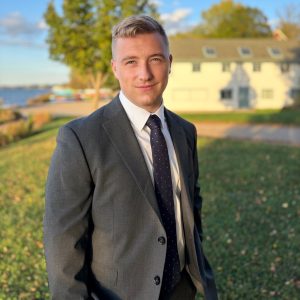
For Eyan Ven Roy, being an MCA meant introducing military-connected students to a mission many of them had never heard of: the Missing-in-Action Recovery and Identification Project, known as MIA RIP. His goal was simple but meaningful: get more military-connected students on campus aware of the project’s work and give them a way to get involved.
To make that happen, Eyan organized an open house where military-connected students could meet MIA RIP team members directly, learn about the project’s mission firsthand, and explore what involvement could look like for them. It was a chance for the program to move from an unfamiliar acronym to something students could see themselves being part of.
Looking back, what stayed with Eyan most wasn’t a single event but the conversations along the way, the stories shared by current and former military students he met throughout his time as an MCA. Those interactions became the most rewarding part of the role.
His advice for future MCAs centers on staying connected in the ways students actually communicate. He learned that a strong social media presence isn’t optional, it’s essential to reaching the student population effectively. His recommendation is straightforward: get comfortable with the social media landscape and use it consistently, since that’s often where the connection to students begins.
Daisy Brown – University of South Florida
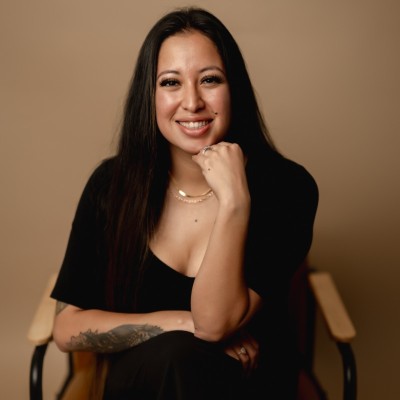
At the University of South Florida’s Office of Veteran Success, Daisy Brown focused her work on a community that’s often overlooked within an already underserved population: women veterans and military-connected women navigating the transition to college and beyond. Her goal was to build outreach that didn’t just support them, but empowered them.
Daisy brought that mission to life through a range of activities. She attended networking events to connect with potential speakers and guests, organized stress-relief events centered on DIY activities where students could unwind and engage with one another, and coordinated with the local police department to bring therapy K-9s to campus, giving students an accessible source of comfort and support.
What Daisy is proudest of is simply having served this community, at a time when, as she puts it, it’s easy for people to forget that service members are still people. Many joined the military to find stability or better their circumstances, and are simply doing their job, whether or not they agree with every decision made above them. Being able to advocate for that humanity was, for her, the heart of the role.
Daisy’s biggest lesson for future MCAs is one she’s still learning to apply to herself: don’t downplay your accomplishments. She points to a donation drive she organized as an example, one that took far more strategizing, planning, and coordination than she initially expected, yet one she found herself dismissing afterward as “just doing my part.” Her advice is to resist that instinct, appreciate what you’ve built, and let it become a foundation to grow from, rather than something to minimize.
Finn O’Brien – University of Notre Dame
As an MCA with Notre Dame’s Office of Military and Veterans Affairs, Finn O’Brien focused on two goals that reinforced each other: strengthen the bonds within the student veteran community, and make sure the wider university saw the unique capabilities military-connected students bring to campus.
Finn brought that vision to life through a range of high-visibility activities. He coordinated tailgates for the Student Veterans of America Notre Dame Chapter throughout football season, opening them to all military-related students and their families. He organized promotion ceremonies for active-duty students, spotlighting the ongoing service many students continue to carry out even while pursuing their degrees. And in one of the more unusual activities, he coordinated the military flyovers for Notre Dame football games.
Coordinating aircraft for a flyover isn’t something most college students ever get the chance to do, and for Finn, it was a rare opportunity to apply military-relevant skills in a completely unexpected setting while still an undergraduate.
His advice for future MCAs is simple and direct: embrace every opportunity that comes your way while you’re at school. For Finn, that mindset was exactly what turned a campus role into an experience he’ll remember well beyond graduation.
John Loy – University of Dayton
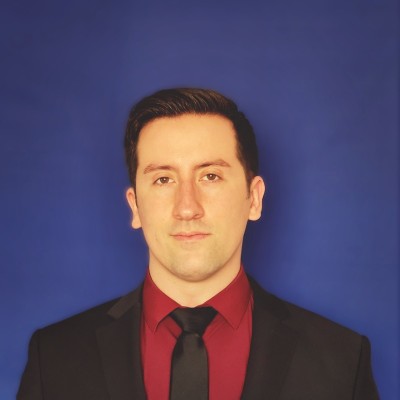
At the University of Dayton, John Loy took on a role that was still finding its shape. As an MCA working between Military and Veteran Programs and Services and the School of Business Administration, his focus was foundational: build a real connection between military-connected students and the military-connected faculty and staff already in the School of Business, and lay the groundwork for something more lasting.
Much of John’s work centered on communication. He facilitated the exchange of program updates and outreach information between the School of Business and Military and Veterans Programs and Services, helping bridge two parts of campus that hadn’t been closely connected before. He also contributed to brainstorming new ways to engage military-connected students, and is preparing to serve as a liaison at an upcoming outreach event designed to strengthen those connections within the school.
What John is proudest of isn’t a single event or metric, it’s the advocacy itself. Stepping into a new and still-evolving role, he made a point of supporting fellow military-connected students and helping improve the flow of information that builds visibility and a sense of community, even when the structures around that work were still being figured out in real time.
That experience shaped his advice for future MCAs. John learned early how much clear communication and structure matter when a program is just getting off the ground, and how strong relationships are often what keep engagement alive when a formal framework hasn’t caught up yet. His recommendation: be proactive, set consistent touchpoints, and create more chances for direct interaction with students to build real momentum with peers and faculty. Like many MCAs before him, John believes the best ideas rarely fail for lack of merit; they just need to reach the right person, or find a little more support to take hold.
Mallory Hobbs – West Virginia University
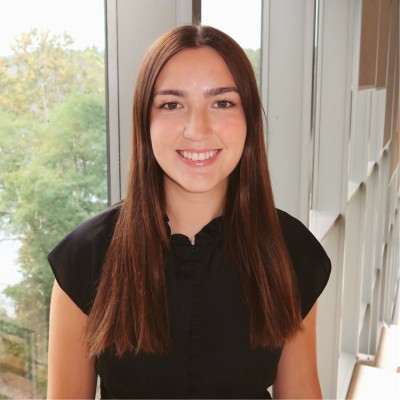
As an MCA working at The Bunker, the Veteran and Military Family Support Headquarters and the Business College at West Virginia University, Mallory Hobbs set out to build a bridge between military-connected students and the career resources available throughout the Morgantown business community, resources that too often exist without a clear path connecting them to the people who need them most.
That vision culminated in a Military and Veterans Networking Night, held during Bridging Innovation Week WV on April 28th. Mallory brought together guest speakers, including a veteran business owner and the Secretary of State, alongside a small business panel featuring veteran resource providers and veteran business owners themselves. The evening combined catered food, networking time, and raffles, drawing more than 80 attendees and raising roughly $1,000 for the Bunker at WVU.
Mallory is proudest of the event itself, and how smoothly it came together. Watching attendees walk away with genuine insight and new connections made all the planning worthwhile.
That planning, she notes, started early: Mallory began organizing the event back in September, and that lead time became one of her biggest lessons. She learned firsthand how much careful, early planning matters, and how reaching out for help and resources doesn’t just make an event easier to pull off, it multiplies what you’re able to offer the community and students you’re serving.
LaTanya Edwards – Norfolk State University
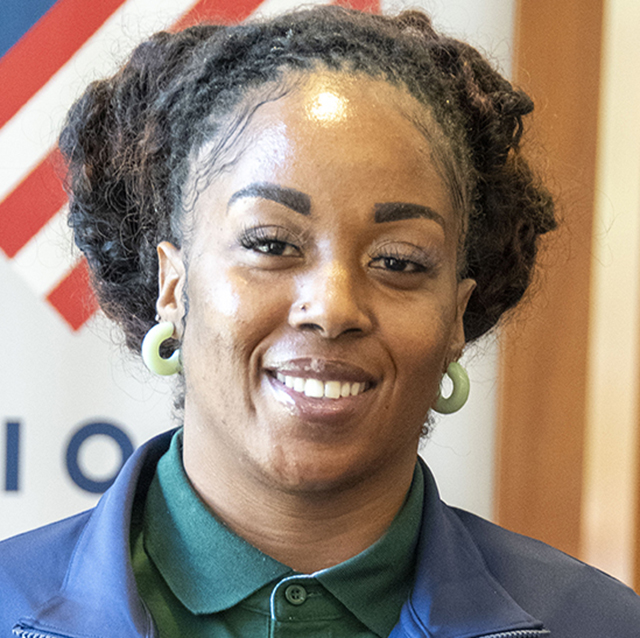
At Norfolk State, LaTanya Edwards served as an MCA within the Office of Accessibility Services, working to bridge a gap that too often goes unnoticed: connecting active-duty service members, veterans, and military-connected students with campus resources they may not have known existed, while building the trust needed for them to actually seek that support.
Much of LaTanya’s work happened in the everyday details. She developed informational materials, bulletins and flyers, designed to raise awareness of campus resources among military-affiliated students. At the front desk, she greeted students, helped them navigate service registration, and worked to create a welcoming, inclusive environment from the very first interaction. Beyond that, she proctored exams, coordinated study room usage, and stayed actively engaged with students to keep them informed about campus events and support services.
Looking back, what LaTanya values most isn’t a single event or achievement, but her own growth throughout the role, as a student, a professional, and an individual. The position gave her the chance to network, build relationships with mentors, sharpen her study habits, and form meaningful connections with the peers she worked alongside.
That growth extended into real personal change. LaTanya describes herself as someone who tends to keep to herself, but the role pushed her to build confidence in communicating with others, sharpen her professionalism and conflict resolution skills, and step more fully out of her comfort zone. Along the way, she was able to connect with fellow military veterans directly, guiding them toward the campus Veteran Association and the additional support and community it offered.
Her advice for future MCAs is rooted in that experience: step outside your comfort zone and take full advantage of opportunities like this one. As LaTanya found, they have a way of fostering growth in ways you don’t expect going in.
Soya Pearson – Howard University
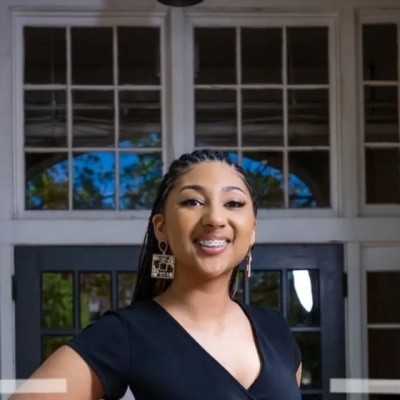
At Howard University, Soya Pearson approached her role as an MCA with a clear purpose: make military-connected students visible, connected, and supported within the broader campus community. Working through Howard’s Office of Military and Veteran Affairs, she focused on creating inclusive spaces, improving access to resources, and elevating the stories of military-affiliated students on campus.
That work took shape through the events she helped bring to life, including the BTU Podcast and the Red, White, and Bison Military Gala. Beyond programming, Soya was active in outreach, connecting students to available resources, promoting upcoming events, and encouraging greater participation within the military-connected community at Howard.
What Soya is proudest of is the visibility itself, watching engagement grow and knowing her work helped build a genuine sense of community for military-connected students who might otherwise have gone unseen on campus.
Her time as an MCA taught her the value of communication and consistency, especially when working with such a diverse student population. Her advice for future MCAs: be proactive, build strong relationships with campus partners, and don’t be afraid to take initiative. As Soya sees it, meaningful impact comes from both the small, everyday efforts and the larger events, and it’s the combination of both that builds lasting community.
Jacob Sullivan – Youngstown State University
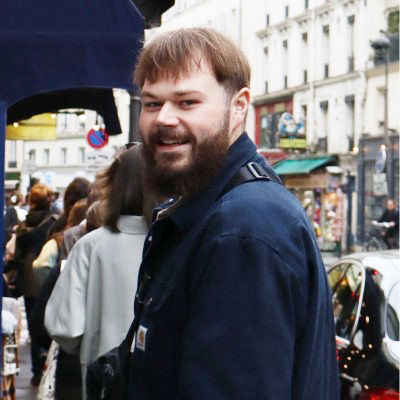
At Youngstown State, Jacob Sullivan saw an opportunity that hadn’t yet been built: a way to recognize veterans on campus not just for their service, but for who they were becoming as students. As an MCA with the Carl A. Nunziato Veterans Resource Center and YSU’s Office of Veterans Affairs, he set out to create that recognition himself.
The result was Pete’s Platoon, a Veteran Spotlight program Jacob established to celebrate both the military accomplishments and academic pursuits of YSU’s veteran students. Selected nominees are featured in the local newsletter every other week, invited to a spotlight luncheon at semester’s end, and presented with a custom, embroidered Pete’s Platoon patch, a small but tangible token meant to carry real meaning. Alongside that project, Jacob helped produce a video package to market YSU’s Office of Veterans Affairs, and worked with the Armed Forces Student Association and a local community member to help establish a new veterans scholarship.
Jacob also made a point of showing up. He supported the annual Veterans/ROTC Alumni golf outing and picnic, 9/11 memorial activities, and student panels and Warrior Awareness Trainings throughout the year, and beyond his assigned duties, he sought out nearly every opportunity to represent YSU’s veteran community, the Office of Veterans Affairs, and the MCA program itself, in the community and on campus.
Of everything he built, Jacob is proudest of Pete’s Platoon and the custom patches he designed as its centerpiece. He wanted the award to feel unique and earned, something with a story behind it, the kind of recognition that carries a little exclusivity and grows in meaning over time. He envisions the program eventually expanding to include podcast-style interviews with local veterans. “Although I wished for more,” he said, “I am proud to have been able to try and bring exposure in a positive light to the veterans community at YSU and in the surrounding local areas as well. Thank you for adding purpose and value to my life by participating in something bigger than myself.”
As YSU’s first-ever MCA, Jacob was building without a blueprint, and he felt that most in the friction of turning ideas into action, where recommendations often had to move through layers of approval before anything could change. Looking back, his advice to future MCAs is simple: don’t take “no” as a final answer. He believes many strong ideas never make it to fruition, not because they lack merit, but because they never reach the right person, or the right support. For those who follow him, he hopes that changes, and that persistence, paired with a little more institutional backing, lets even bigger ideas take hold.
Kandice Withers – Howard University
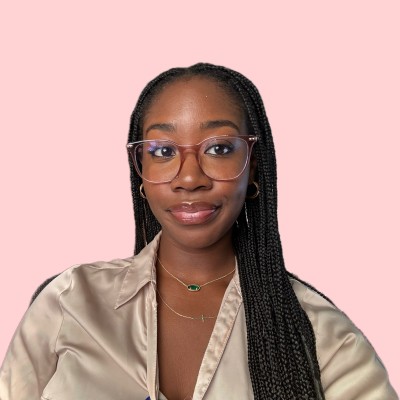
As an MCA with Howard University’s Office of Military & Veteran Services, Kandice Withers took on a project rooted in a simple but urgent need: clothing. Partnering with US VETS, she organized a clothing drive to support underserved veterans, helping establish a “Veteran As Needed Wardrobe” where veterans could take what they needed for job interviews, winter weather, or personal milestones, no cost, no barriers.
Kandice’s work spanned the full lifecycle of the project. She canvassed Howard’s student population to collect donations, then washed and dried each piece of clothing herself before helping set up the wardrobe at the US VETS facility. In the end, she and her collaborators collected and sorted more than 50 pounds of clothing, arranging it in a way that felt less like a donation bin and more like a boutique, giving veterans a dignified way to choose what they needed.
What Kandice is proudest of is simply having served this community, at a time when, as she puts it, it’s easy for people to forget that service members are still people. Many joined the military to find stability or better their circumstances, and are simply doing their job, whether or not they agree with every decision made above them. That recognition of their humanity was, for her, the driving force behind the work.
Kandice’s biggest lesson for future MCAs is one she’s still learning to apply to herself: don’t downplay your accomplishments. She points to the clothing drive as an example, a project that took far more strategizing, planning, and coordination than she initially expected, yet one she found herself dismissing afterward as “just doing my part.” Her advice is to resist that instinct, appreciate what you’ve built, and let it become a foundation to grow from, rather than something to minimize.
Sarah Ellis – The Ohio State University
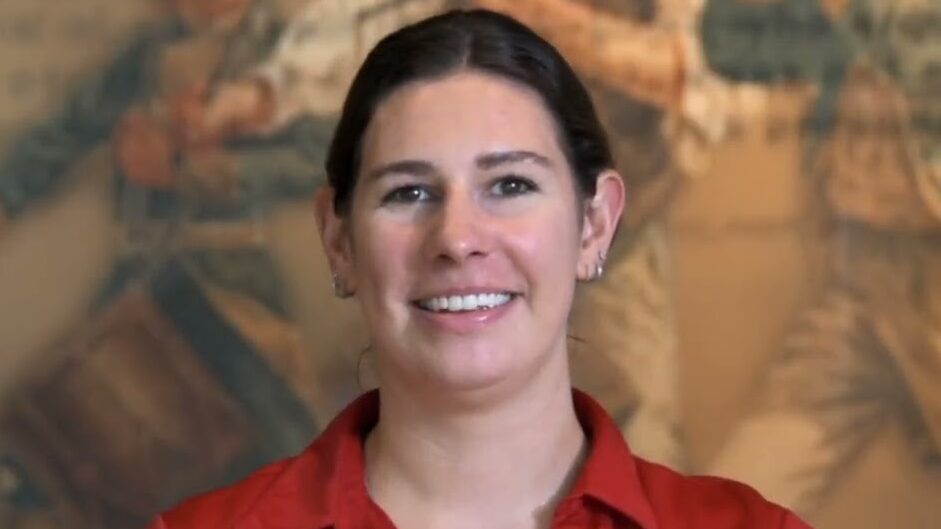
At Ohio State’s College of Medicine, Sarah Ellis noticed a gap that was easy to miss simply because the population was so small: military medical students, scattered thin across a large college, with little built-in community or advocacy of their own. As an MCA, she set out to close that gap by building mentorship and camaraderie between military resident physicians and military medical students preparing for residency.
Sarah brought that community together in ways both reflective and practical. She organized participation in the 9/11 Memorial Stair Climb, hosted a pizza party to gather students and talk through the future of the program, and welcomed the Navy Bureau of Medicine to campus for a networking event that connected students directly with military physicians.
What Sarah is proudest of is the recognition itself, giving visibility to military medical students who, by virtue of their small numbers, had rarely had anyone advocating specifically for them. Helping them find community and watching them step forward within the College of Medicine was, for her, the most meaningful part of the role.
Her advice for future MCAs is grounded and honest: think through the logistics of every event, and don’t be afraid to lean on others when you need help. As Sarah puts it, it’s okay not to know everything, and reaching out is often the fastest way to find the answer.
Cameron Adkins – University of Nebraska-Lincoln
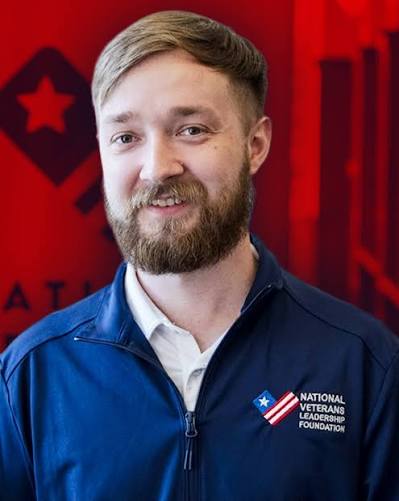
As an MCA with the Military Veteran Success Center at the University of Nebraska-Lincoln, Cameron Adkins set out to strengthen something intangible but essential: a sense of belonging. A Navy veteran himself, Cameron understood firsthand how disorienting the shift from military life to college can be, and he wanted the Success Center to be more than a resource, a place where veterans, service members, dependents, and other military-connected students felt genuinely understood.
His work centered on presence and accessibility. Cameron supported the Success Center’s day-to-day operations, connected students with campus and veteran-specific resources, and took part in outreach efforts aimed at building community among students who don’t always feel tied into traditional campus life. Just as important was the role he played simply by being available, a consistent, approachable point of contact for students, whether they needed answers, a listening ear, encouragement to get involved, or someone to carry their concerns back to the office.
What Cameron is proudest of is the perspective he brought to the role. As someone who had lived the transition from military service to student life, he was able to help others feel seen and supported in a way that came from genuine understanding, not just good intentions. The role also shaped his own growth as a leader, deepening his involvement in veteran advocacy on campus, including his continued work with the Student Veterans Association.
Cameron’s advice for future MCAs centers on trust, and how it’s earned. Trust, he says, is built through small interactions over time, which means showing up consistently and listening before anything else. He’s careful to note that no two military-connected students carry the same experience or need the same kind of support: some need help finding resources, some need community, and some simply need to know that someone on campus understands where they’re coming from.
Hayden Hews – Ohio University
As a Military Community Advocate at Ohio University, Hayden Hews brought a unique asset to Career Services: his own military background. That shared experience became the foundation for closer, more informed support for the university’s military-connected students.
Hayden’s work centered on direct engagement — leading workshops and meeting one-on-one with students to help them navigate career planning with someone who understood their path. His proudest moment came when he hosted a resume workshop that drew six service members, both prior and currently serving, into the same room to sharpen their materials and share their experiences.
Looking back, Hayden’s advice for future MCAs points to a broader truth about this work: patience matters as much as expertise. Not every colleague or advisor will have a military connection, and part of the MCA role is helping those without that background understand how best to support students who do.
Malachi Talbert – The Ohio State University, Lima Campus
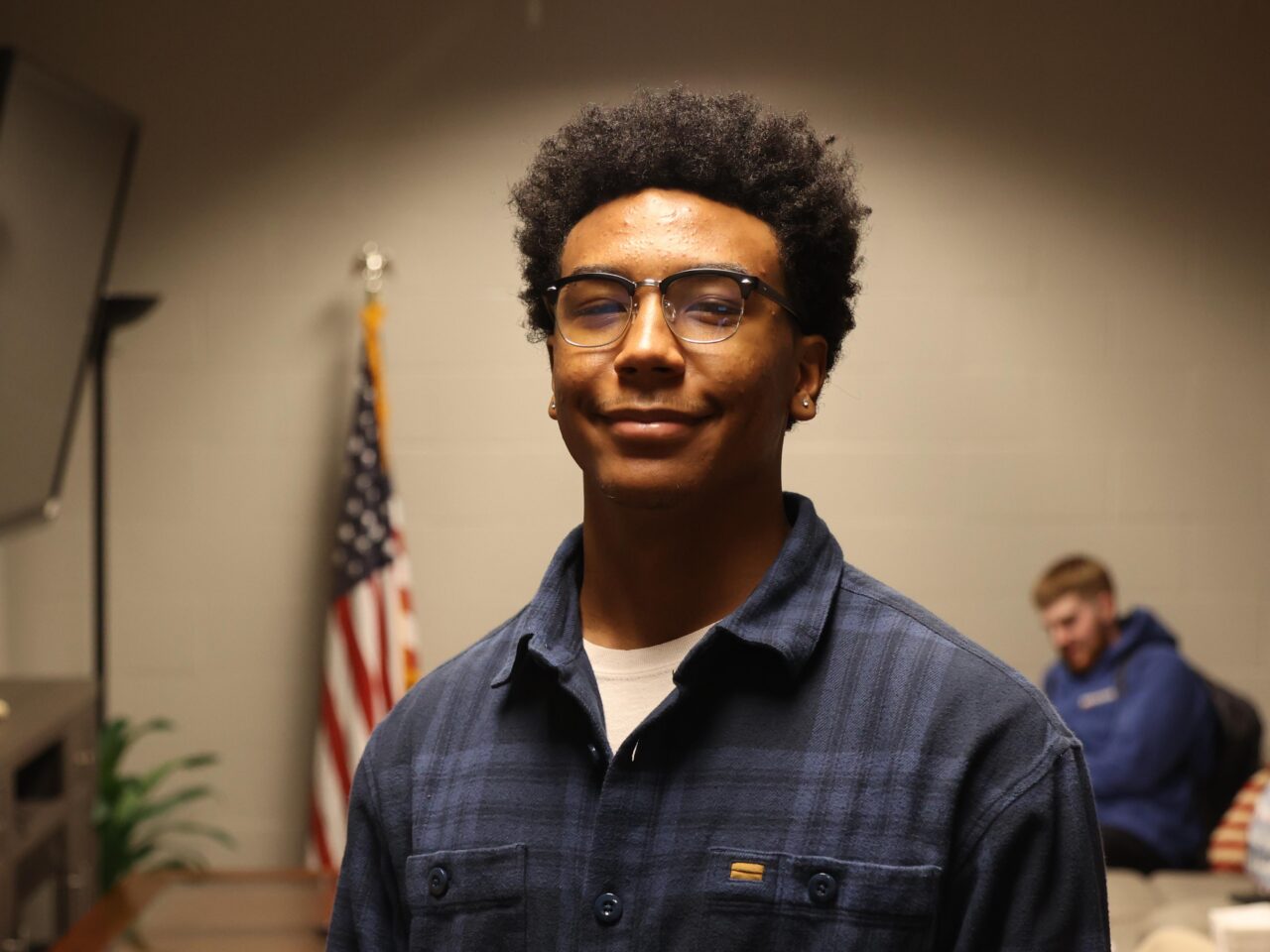
At Ohio State’s Lima campus, Malachi Talbert set out to build something bigger than individual support: a united, visible military-connected community woven into the fabric of campus life. His goal was to boost involvement and participation among military-connected students while fostering a culture of inclusion for everyone on campus.
Malachi brought that vision to life through a full slate of programming, including Veterans Trivia nights, physical fitness and wellness activities, an OOTD walk, a Veterans Recruitment and Open House, and prize giveaways that drew students in and kept them coming back. Each event served the same underlying purpose of promoting a community where military-connected students felt seen and connected to one another.
What Malachi values most from his time as an MCA isn’t a single event, but the relationships he built along the way. Veterans and military-connected students came to trust him, opening up about things they didn’t share elsewhere. One moment stands out in particular: an older veteran who confided in Malachi, finding in him a source of genuine support and kindness on campus.
His advice for future MCAs reflects the balance this role demands. Work hard to make everyone feel included, but don’t lose sight of the practical side. That means keeping a close eye on budget and spending, managing time between office hours and student needs, and staying flexible enough to meet students where they are.
Kain Greeno – University of Dayton
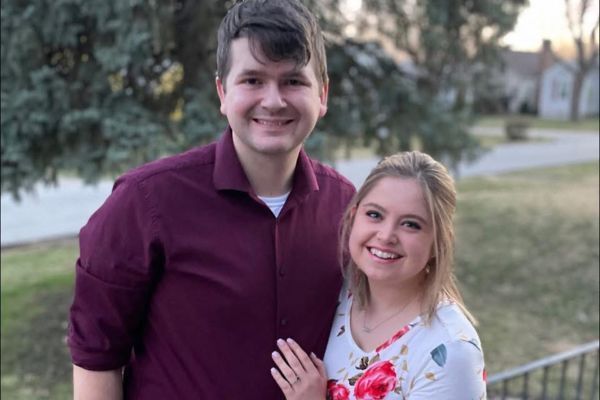
Working within the School of Engineering, Kain Greeno focused his MCA efforts on a specific and often overlooked gap: making sure veteran engineering students had full access to the information, programs, and activities their school had to offer.
Kain’s approach centered on connection and communication. Through events like Faculty in a Fox Hole, he created space for veteran students to engage directly with faculty, while his broader work in disseminating event information helped close the gap between what the School of Engineering offered and what veteran students actually knew about.
Kain is most proud of the interest he was able to generate around events that typically go unnoticed within the veteran community, a gap he attributes largely to the fact that veteran students are often non traditional students juggling responsibilities that keep them at arm’s length from typical campus buzz. By actively surfacing opportunities that might otherwise pass by, Kain helped bring veteran students back into the fold of campus life.
His advice for future MCAs is practical and specific: get on the mailing list for every individual department, not just the school as a whole. It’s a small step that ensures no opportunity slips through the cracks for the students who need it most.
Cole Hendrix – Indiana University
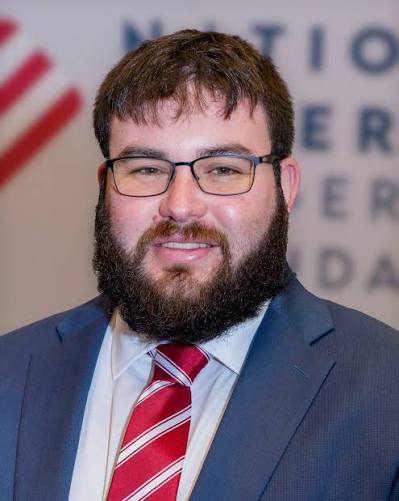
At Indiana University’s Center for Veteran and Military Students, Cole Hendrix took on a research-driven mission: building the case for expanding the center’s space, resources, and services through solid, credible data.
Cole’s approach was thorough. He interviewed military-connected faculty, staff, students, and stakeholders, including administrators of student services and neighboring culture centers, to understand the full picture of what was needed. He also sent a survey to all students receiving VA funds, ensuring the voices of the students the center serves most directly were part of the research.
That groundwork paid off. Cole’s research data played a direct role in the decision to move the center to a new facility and expand its resources, a tangible outcome that will benefit military-connected students at Indiana University for years to come.
His advice for future MCAs is simple: get creative. There are countless ways to support military-connected students, and the most effective MCAs are the ones who find the approach that fits their campus and lean into it fully.
Ryan Kwon – University of Notre Dame
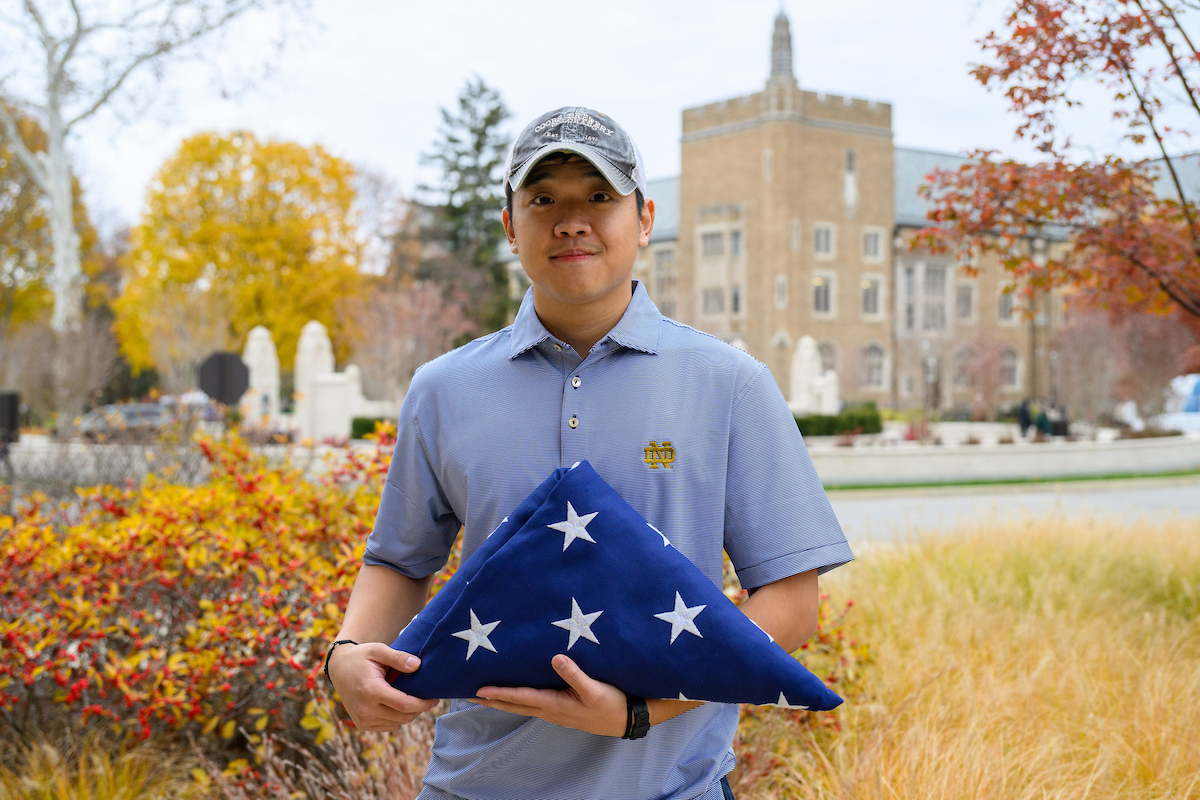
As an on-campus MCA at the University of Notre Dame, Ryan Kwon focused on bringing the veteran and military community together in a more meaningful way. His work aimed to build a stronger, more integrated community, one that also supported mental health and raised general awareness of the military-connected presence on campus.
Ryan brought that goal to life through initiatives like the At Ease Booth and Battle of the Branches, alongside his ongoing role as a community advocate for military-connected students. Each effort was designed to create space where people could show up, connect, and feel part of something larger.
What Ryan is most proud of is the sense of connection he felt in return. Contributing to efforts that strengthened the military community on campus became a source of personal growth for him as well, a reminder that the work of an MCA often gives back as much as it asks.
His advice for future MCAs is grounded in patience and persistence. Leverage campus resources and trust the process. People will slowly start showing up to events and meetings, and over time, those small contributions build into real connections that make a lasting difference.
Christopher Ogle – Bowling Green State University
When Christopher Ogle set out to improve how Bowling Green State University tracked its military-affiliated students, he saw an opportunity to build something better from the ground up. Rather than continuing to rely on an outside platform, Christopher designed, built, and now manages an in-house system that gives BGSU more control over student data, saves the university money, and creates a more direct connection to its military community.
The work went beyond the system itself. Christopher trained BGSU’s Peer Advisor Team, undergraduate students serving on VA work-study contracts, on how to use the new tool, then wove it into their daily workflow, tracking and reporting the status of military-affiliated students as they move through their time at BGSU.
His advice to future MCAs is simple: show up and lean on the resources already around you. “People will slowly start to show up to events and meetings, and it will start to make a difference,” he said. Those small, consistent connections, he’s found, are where real impact happens.
What Christopher is proudest of isn’t the system itself, but what it represents: a stronger sense of community, and a contribution that will outlast his own time as an MCA. Along the way, he says, it helped him grow personally too.
Abigail Brown – The Ohio State University
When Abigail Brown became an MCA, she set out to solve a visibility problem: Ohio State’s Keenan Center for Entrepreneurship was a new resource, and most military-connected students didn’t know it existed, let alone that the skills they’d built in uniform translated directly into entrepreneurial ones. Her signature event, a panel of Columbus-area veteran entrepreneurs, tackled that gap head-on, giving students a candid look at the transition to civilian life: what these founders wished they’d known, how their military experience shaped their business instincts, and the paths that led them there.
The turnout exceeded anything the Keenan Center had seen for a similar event, and the room stayed full long after the formal program ended, as students and panelists kept the conversation and the networking going. For Abigail, that response was the clearest proof of what she’d set out to prove: that once military-connected students see entrepreneurship as an extension of their service, they show up. Her main takeaway for future MCAs was about persistence in promotion: getting the word out for a lesser-known campus service takes more sustained push than expected, but the payoff, as her event showed, is worth it.
Contessa Bigler – Ohio University
Contessa Bigler focused her MCA year on a quieter but critical need: making sure military-connected students knew about—and felt comfortable using—Ohio University’s Counseling and Psychological Services (CPS). Her approach was to lower the barrier as much as possible. Twice a month, she hosted a coffee hour in the veterans lounge, pairing donuts and casual conversation with practical information about CPS: where to find it, how to access services online, walk-in hours, group sessions. The informality was the point—she wanted questions to feel easy to ask. She backed this with weekly check-ins with Dr. Gray at CPS to refine the initiative, added office hours during off-weeks in her second semester, and stayed visibly present at the Veterans Center so students had a familiar face to approach. She was also open about her own military experience, using it to model the kind of comfort with vulnerability she hoped to build in others. Her work extended into spring with a collaboration alongside the Collegiate Recovery Community to screen Sheepdog, a film following a veteran’s journey through mental health struggles toward a hopeful outcome.
Contessa’s proudest moment came unexpectedly: meeting Major General (retired) John Harris, who had led the Ohio Army National Guard during her service. Describing her work as an MCA to him was a full-circle moment made possible by the connections the Veterans Center opened up for her.
Her advice to future MCAs reflects the same steady patience that defined her approach: don’t measure your worth by turnout or engagement numbers. Showing up with consistency and kindness matters more than headcounts.
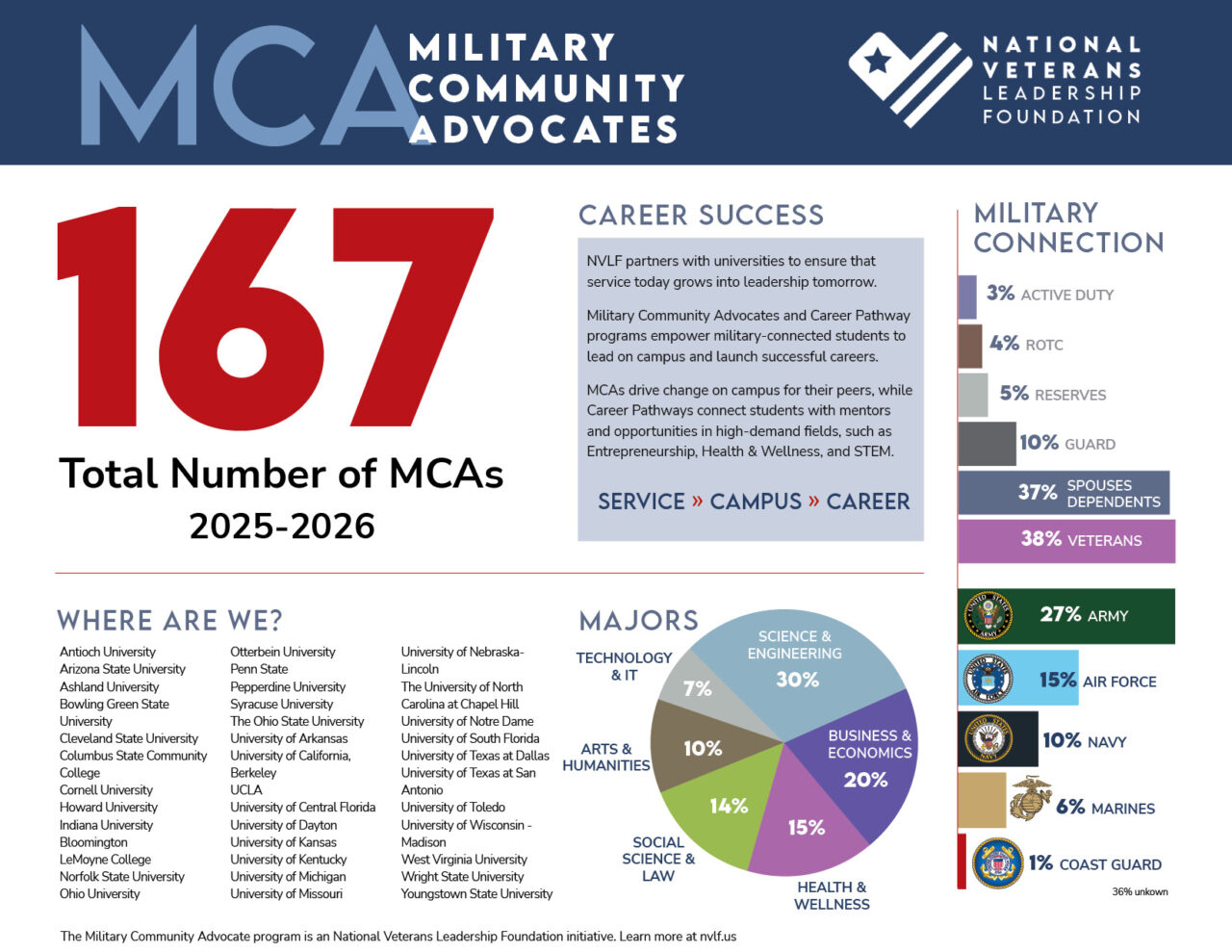
WHERE DO MCAs WORK ON CAMPUS?
These are some of the departments where MCAs have been placed.
- Admissions- Undergraduate & Graduate
- Career Services
- Office of Military and Veteran Services
- Entrepreneurship Center
- Development Office
- Student Services/Student Success
- Various Academic Colleges
(Engineering, Nursing, Business, Arts & Sciences, Medical, Public Policy, etc) - Branch/Satellite Campus Locations
- University Legal Center
- Recreational Sports
- Communications/Campus Newsletter
- Parent & Family Relations
- Off-Campus and Commuter Student Service
- Financial Aid/Bursar Office
- Athletics
- Health Center/Student Wellness Center
- Office of Accessibility/Disability Services
MCA PROJECT EXAMPLES
A quick overview of successful MCA projects from campuses nationwide. Use this as inspiration when planning your own initiative.
Community-Building & Engagement
Projects that strengthen belonging and connection among military-connected students.
- Social events: bowling, tailgates, ice curling, pickleball, family outings
“To give the veterans something fun to do… Bowling.” - Welcome-back gatherings, holiday events, and campus-wide meetups
- Family-focused programming for student parents and dependents
Academic & Career Support
Initiatives that help students succeed academically or prepare for professional opportunities.
- Graduate school mentoring and application guides
“Implementation of a mentor-mentee program… and an easy-to-follow guide.” - Resume reviews, career fair tours, networking events
- Student research showcases and colloquia
Advocacy & Resource Navigation
Projects that help students access benefits, services, and campus support systems.
- Awareness campaigns for legal services, disability services, or benefits
“Raise awareness… on how student legal services can be of use.” - Guides explaining campus processes (funding, policies, benefits)
- One-on-one support for navigating GI Bill and tuition issues
Leadership & Organizational Development
Efforts that build long-term structures for future MCAs and student veterans.
- Launching or revitalizing SALUTE or SVA chapters
“Establish infrastructure… to restart the Cornell Chapter of SALUTE.” - Creating alumni networks or mentorship pipelines
- Strengthening student veteran organizations
Health, Wellness & Resilience
Programs that support physical, mental, and emotional well-being.
- Hydration education and wellness stations
“Provided hydration tools… and placed a hydration station inside MVC.” - Mindfulness and art-based mental health events
- Fitness and remembrance events (rucks, 5Ks, stair climbs)
Entrepreneurship & Innovation
Projects that connect students with business leaders and creative opportunities.
- Entrepreneurship bootcamps, workshops, and speaker panels
- Social media and newsletter initiatives promoting entrepreneurial resources
Campus Recognition & Institutional Change
Initiatives that create lasting, visible improvements to campus culture.
- Purple Heart parking spaces and Purple Heart University designations
“Being able to lead the successful implementation of a designated Purple Heart parking space.” - Veterans Day ceremonies and commissioning events
Media, Communication & Storytelling
Projects that inform, connect, and celebrate the military-connected community.
- Podcasts for military-affiliated students
- Departmental or campus-wide newsletters
- Articles highlighting military-connected students and women veterans